
Blossom Nitrile Examination Gloves

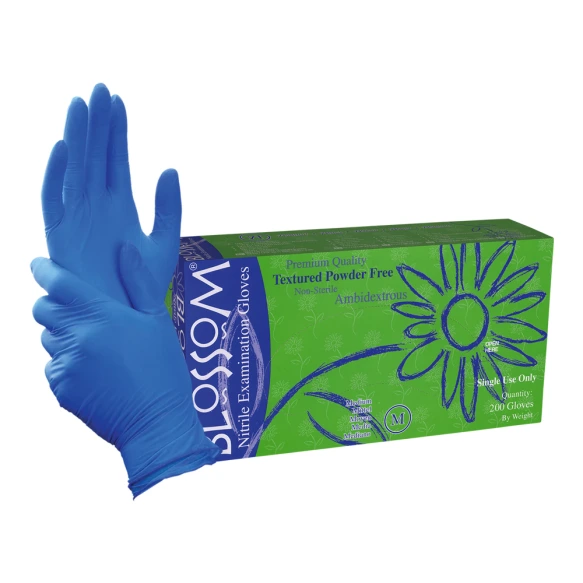
Ensure safety, comfort, and performance with Blossom Blue Nitrile Examination Gloves - premium disposable gloves designed for healthcare, dental, lab, and general-purpose applications. Crafted from high-quality nitrile, these gloves provide a dependable barrier against contaminants while delivering excellent strength and tactile sensitivity.
Key Features
- Powder-free comfort: Powder-free design minimises residue and irritation, making it ideal for sensitive skin or environments where cleanliness is essential.
- Textured grip: Finger-textured surface boosts grip and control, especially in wet or slippery conditions, improving confidence and accuracy in handling instruments.
- Ambidextrous fit: Suitable for both left and right hands with a beaded cuff for easier donning and added strength at the wrist.
- High-volume packaging: Each box contains 200 gloves, and cases include 10 boxes — perfect for busy clinics and practices that use gloves constantly.
Nitrile Examination Gloves: Protection, Comfort & Performance
Most of us have used latex at some point and then switched once irritation or tearing became an issue. From there, nitrile examination gloves became a common choice in clinical settings. Nitrile is a synthetic rubber made to be durable and chemical resistant. It offers protection against contaminants while maintaining tactile sensitivity.
Powder-free construction also plays a role. Powder-free nitrile gloves reduce residue and limit airborne particles. For dental and medical teams, that balance matters during procedures that need precision.
Key benefits include:
- Less surface contamination compared with powdered alternatives
- Reduced risk of skin irritation during extended wear
- Cleaner handling of instruments and materials
The finger-textured surface found on many nitrile exam gloves also improves grip when handling instruments or working in wet conditions. That added control supports accuracy during patient care and laboratory tasks.
How nitrile, latex and vinyl differ
|
Feature |
Nitrile |
Latex |
Vinyl |
|
Allergy risk |
Latex-free |
May trigger latex allergy |
Latex-free |
|
Durability |
High puncture resistance |
Flexible bit prone to tearing |
Lower durability |
|
Chemical resistance |
Strong |
Moderate |
Limited |
|
Fit & sensitivity |
Close fit with good tactile control |
High flexibility |
Looser fit |
Nitrile exam gloves are widely used in healthcare, dental clinics and laboratories. For teams seeking a latex-free option with reliable performance under demanding conditions, nitrile is a widely adopted choice in Australian clinical settings.
How to Choose Examination Gloves That Fit Your Use Case
Glove choice should reflect the level of exposure in your setting. Nitrile examination gloves are commonly used in dental and medical environments due to their puncture resistance and latex-free material. For non-medical tasks, lighter-duty options may be enough, but clinical work typically requires a higher barrier rating.
Protection needs differ depending on the task. When choosing gloves for healthcare use, think about:
- Protection Level: Clinical procedures that involve bodily fluids require a higher barrier standard. Match the glove material and thickness to the level of exposure expected.
- Powder-free vs Powdered: Powder-free gloves reduce residue on hands and equipment. They also limit airborne particles in treatment and lab spaces.
- Grip & Tactile Sensitivity: Textured fingertips improve control when handling instruments. Good tactile response also supports precision during detailed procedures.
- Sizing & Fit: Gloves that are too tight can increase hand fatigue, while a loose fit may reduce dexterity. Small, medium and large sizes allow staff to choose the right fit for them.
- Single Use & Hygiene: Most clinical environments use single-use gloves. Changing gloves between patients or tasks supports hygiene standards and reduces cross-contamination risk.
In dental clinics, grip and tactile sensitivity often take priority during restorative and surgical procedures. Meanwhile, barrier rating and durability are usually front of mind in medical settings. Laboratories may focus on chemical resistance and comfort during extended wear.
When choosing the best nitrile examination gloves, consider how they will perform under your actual workload. Matching the glove to the demands of your procedures helps ensure consistent performance.
Safety Standards & Best Practices for Examination Gloves
Glove use is routine in clinical work, but correct selection and handling still matter. In Australia, nitrile glove standards reference recognised testing for barrier integrity, tensile strength and puncture resistance. Clinics are expected to source gloves that meet these benchmarks as part of general compliance.
When choosing nitrile examination gloves, it helps to look beyond colour and box size. Key indicators include:
- Thickness suited to the level of exposure
- Tensile strength that reduces tearing under tension
- A cuff that holds securely at the wrist
Powder-free construction is widely preferred in treatment rooms and labs, as it reduces airborne particles during donning and limits residue on surfaces. Clear glove safety guidelines also play a role in preventing contamination. The way gloves are put on and removed directly affects hygiene outcomes.
So, how do I wear examination gloves safely?
- Perform hand hygiene before putting gloves on
- Check for visible damage before use
- Avoid touching non-clinical surfaces once gloved
- Remove by peeling away from the wrist and turning inside out
- Dispose immediately after removal
- Perform hand hygiene again
Always remember that gloves are designed for single use and should be changed between patients or tasks. Prolonged wear increases the chance of micro-tears and surface contamination.
Storage conditions matter as well. Keep unopened boxes in a cool, dry area and away from direct sunlight. Excess heat or moisture can affect the material’s integrity over time. The same approach applies to other PPE, including masks, gowns, headwear, shoewear and eyewear.
When used correctly, nitrile examination gloves support infection control standards in dental, medical and laboratory settings; all while aligning with Australian compliance.
Frequently Asked Questions - Nitrile Examination Gloves
What are nitrile examination gloves used for?
Nitrile examination gloves are disposable gloves made from synthetic rubber. They are used in dental, medical and laboratory environments to provide a barrier against contaminants while maintaining tactile sensitivity. These gloves are puncture resistant and latex-free, making them an ideal choice for procedures involving fluids, or close patient contact.
Are powder-free gloves better than powdered?
In most clinical environments, powder-free gloves are preferred. Powder can leave residue on hands and equipment, and airborne particles may affect treatment areas. Powder-free options reduce this risk and are often more comfortable for extended wear, especially in settings with strict hygiene requirements.
How do I choose the right size of glove?
Glove fit has a direct impact on comfort and control. A poor fit can lead to fatigue or reduced dexterity during procedures. When selecting size, make sure:
- The glove should fit snugly without restricting finger movement
- Fingertips should not feel tight or overstretched
- The cuff should fit securely at the wrist
If you find that your staff is regularly adjusting their gloves during procedures, you may need to review sizing.
Are these suitable for medical and clinical settings?
Yes, they are. Nitrile examination gloves are widely used in dental clinics, medical centres and laboratories. Their barrier strength and resistance to puncture support infection control standards expected in these environments.
Do these gloves prevent latex allergies?
They do not trigger latex allergies because they contain no natural rubber latex. This is important in healthcare settings, where repeated exposure to latex can cause sensitivity for staff or patients. Choosing latex-free gloves reduces that risk and supports a safer working environment.
| Short Name for Home Page | Nitrile Gloves |
|---|